
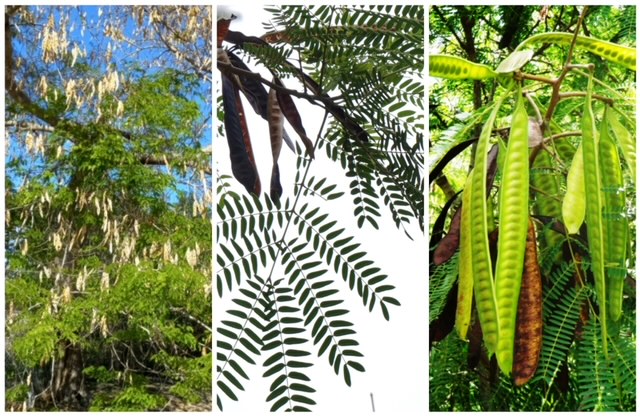
What is Tan-Tan Tree/Bush?
Tan-Tan is a tree/bush aka “False Tamarinds” which are abundant on St. Croix.
The scientific name is Leucaena glauca L.
Species: L Leucocephala
Genus: Leucaena
Family: Fabaceae
Sub Family: Caesalpinioideae
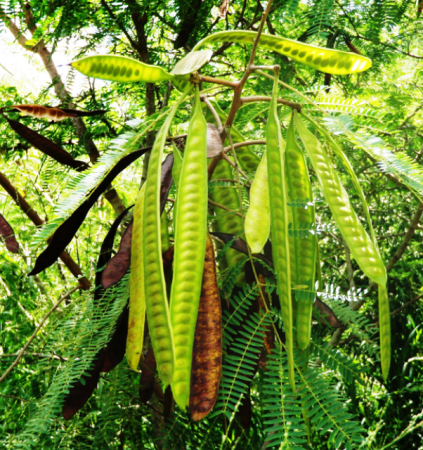
The Tan-Tan offers numerous benefits, including its utility as a food source, medicinal properties, and its use in skin treatments. This tree typically reaches a height of around 18 feet and boasts a moderately slender trunk that can be easily encircled by your palms. While it is susceptible to being felled with a machete due to its thin trunk, its roots are notably robust and challenging to uproot from the ground. The branches of the Tan-Tan are broad, adorned with green stems and slender, oval-shaped leaves. These branches also bear elongated pods that are green in color and contain multiple seeds.
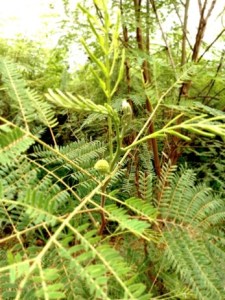
As these pods mature, transitioning to a brown hue, they naturally split open, releasing small, brown, oval-shaped seeds. Tan-Tan trees exhibit remarkable resilience, sprouting new growth rapidly. Moreover, it produces spherical green flowers that later bloom into petite white blossoms resembling those of dandelions. These flowers emit a mildly sweet fragrance.
During the late 1800s, tracing its origins to the sugar cane fields of St. Croix, the Tan-Tan proliferated, becoming a ubiquitous presence. Over time, tales of its remarkable benefits spread, and as generations passed on the island, the Tan-Tan transformed into a thriving wilderness of trees, with its advantages still intact. In those bygone eras, laborers toiling in the fields often turned to the leaves of the Tan-Tan to heal their wounds and lacerations.

Furthermore, the sturdy stems of these trees served as implements for taming livestock, functioning as whips in the past. The flexible nature of the tree’s stems allowed for precise control when managing the herd. However, it’s noteworthy that landlords would also employ these same whips on the workers, resulting in bruises and cuts on their bodies. Nevertheless, these injuries healed rapidly, and the laborers recognized the tree’s medicinal potential for skin treatment. They continued to experiment and document the tree’s medical properties.
Proven fact of my own, I heard the stories and tried it. I have used Tan-Tan for stings, bumps, and rashes. I can attest that the Tan-Tan can heal as fast as two days. I once got cut from a glass on my leg, I grabbed a handful of Tan-Tan’s leaves and ponged the green young leaves with a ¼ cup of water until they became sticky and crushed in pieces. I dabbed it on the wound and wrapped it with a white cotton medical band. It healed in a jiffy.
Back in the day, a long time ago, the villagers would use banana leaves to wrap wounds and use the coconut leaves cut into strings to tie the wound. The next day the cut was closed, the following day the cut had a scab, healed. Villagers were thrilled, they did not have to go to the hospital for stitches.
People who know about Tan-Tan tell their family stories, some people say they have been stung by multiple Jack Spaniard wasps. They took a handful of leaves, blended them with water, rubbed the mixture, and put it on the stings, and in less than 1 hour the swelling was gone.
In another account, a neighbor woman told me, she was in the garden and angered a fire ant’s nest. She felt like her feet were on fire from the ant bites. She ran to get some alcohol rub, but she was out. She washed off her feet with water to get the ants off. Her feet, her legs, and her hands got multiple bites and began to swell. The woman remembered her ancestors’ stories and grabbed some of the Tan-Tan leaves and started rubbing them on the bites, the itching stopped, and the swelling went down almost immediately. Since then, she has kept her backyard with Tan-Tan.
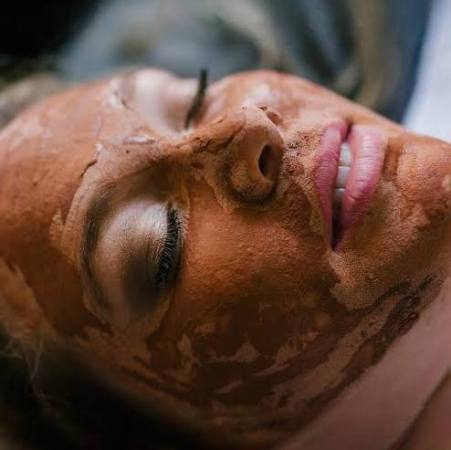
Tan-Tan Face Mask
The leaves are good for rashes, but you can also use it as a face mask at night, blend with water until it is thick and creamy. Use 1 cup of water and 2 cups of leaves, add a little water at a time until you get a good texture for the face mask. Dab the mix until it covers the face. Let it sit for an hour and rinse, pat your face dry, and repeat daily for a refreshed face.
Tan-Tan as a Food Source
In many countries, Tan-Tan is used in delicious meals. Benefits & Recipes
- Dry Tan-Tan stems can be used for charcoal when you want to barbecue, it gives a nice smoky flavor to the food.
- The Tan-Tan seeds can be a healthy substitute for coffee.
- In some countries it is known as a viable source of food. The seeds can be cooked with rice and added to soups and other exotic recipes.
- The Tan-Tan flower can be used as seasoning in foods and salads, the leaves themselves are also used in salads.
Please be advised to check with a doctor for allergic intake or other medication that may cause a reaction.
Growth of the Tan-Tan
One of the advantageous aspects of Tan-Tan is its rapid growth and widespread propagation. From a wild seed, sprouts can emerge swiftly even in your potted plants. Surprisingly, this so-called weed holds substantial benefits. Rather than discarding it, incorporating it into your diet can aid in detoxification, provide antibiotic properties, and contribute to a youthful and healthy appearance for your body.

Tan-Tan as a Tea
While you have your bush tea add Tan-Tan leaves, the leaves give it a bit of a green pea flavor. It tastes good when added to your lemon grass tea and is good for cleaning out toxins in your body.

Arts & Craft
The seeds are often used for arts and crafts. In some elementary schools in the Virgin Islands, the teacher would ask the students to bring as many dried Tan-Tan pods full of seeds to create holiday reefs with the pods. Here is an example of a Tan-Tan jewelry necklace.

Save the Tan-Tan
In conclusion, Virgin Islanders, embracing Tan-Tan trees in your backyard is not only acceptable but also highly beneficial. These trees are not just an addition to your landscape; they contribute to oxygen production and air purification. So, if you find Tan-Tan trees in your yard, allow them to flourish. They are more than just plants; they are healers, not mere weeds. They could be the very trees that hold the key to saving your skin or even your life.
Interesting. Learned alot about a plant that is considered of no use and a menace in the yard.
Tantan..truly a nature gem…
Not surprise at all only more convinced, especially the medicinal uses. wow. Good informational knowledge on the plant. Also I leaned the uses in healing severe cuts .
Not surprise at all only more convinced, especially the medicinal uses. wow. Good informational knowledge on the plant.
TanTan is invasive. it will take over the landscape and grows rapidly. it out competes the native vegetation and is really a plant that needs to be restricted as much as possible due to ability to take over in our climate here